
Comment comparer les fournisseurs de machines industrielles
Comparez les fournisseurs de machines industrielles selon la conformité technique, les composants, le périmètre, les essais, les conditions commerciales, le coût du cycle de vie et le service après-vente, pas uniquement selon le prix.
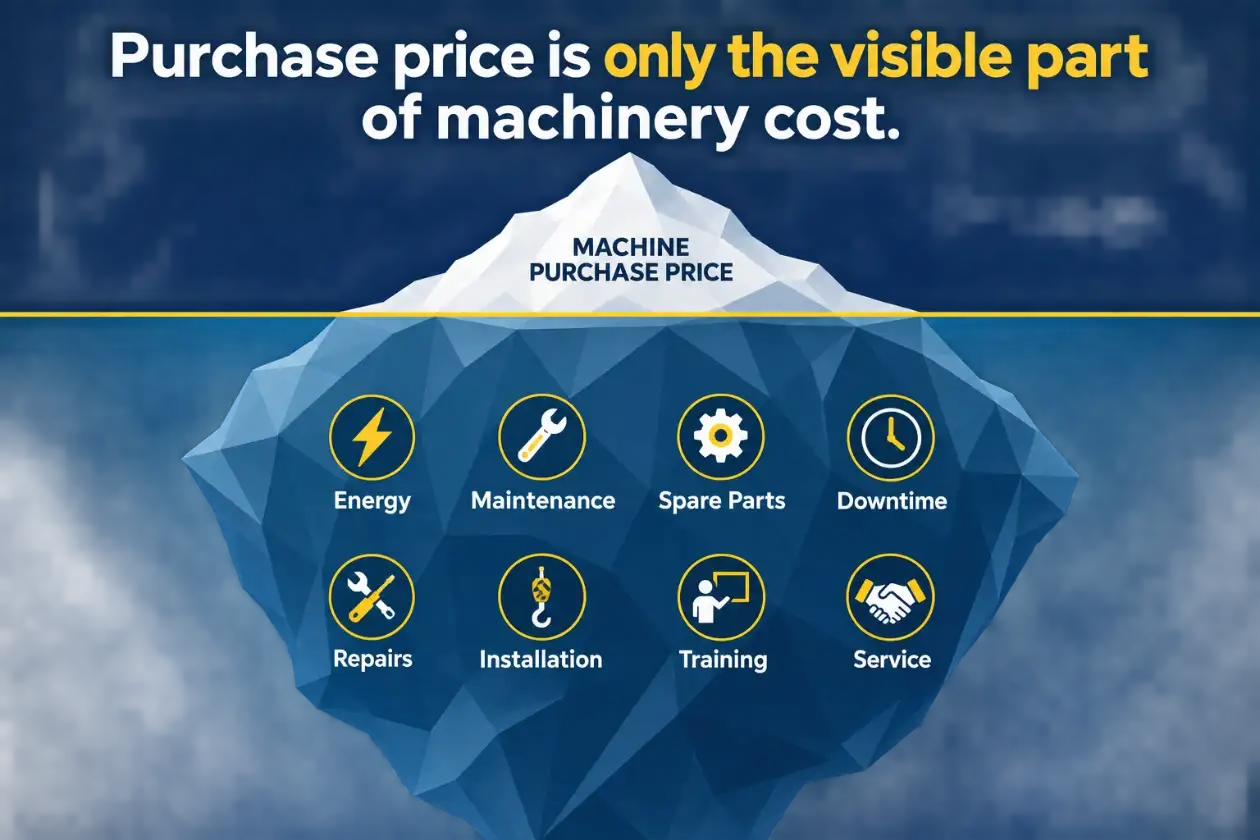

Industrial machinery quotations are rarely comparable when first received. Suppliers use different models, assumptions, inclusions, component grades, test methods and commercial bases. A low price can reflect efficiency, but it can also reflect missing scope or a machine that does not satisfy the application.
The comparison should therefore answer two questions separately: Is the offer technically and operationally acceptable? If yes, which acceptable offer provides the strongest overall value and lowest manageable risk?
Begin with one controlled industrial machinery RFQ. Confirm supplier identity and capability using the manufacturer verification guide, and use the complete China machinery sourcing guide for the wider process.
Why machinery quotations cannot be compared by price alone
Two quotations may show the same nominal capacity while differing in the conditions behind that value. They may also include different accessories, component brands, controls, testing, documentation, packaging or service.
| Hidden difference | Possible effect |
|---|---|
| Different rating conditions | The same stated output may not be available at the buyer's site |
| Different component grades | Reliability, efficiency, serviceability and replacement cost may change |
| Different scope boundaries | Installation-critical items may become unexpected extras |
| Different testing obligations | One offer proves performance while another provides only a startup demonstration |
| Different Incoterms | Freight, insurance, export handling and risk transfer are not aligned |
| Different warranty coverage | Parts, labor, travel and response responsibilities may vary materially |
Step 1: Create a compliance matrix
Place every RFQ clause in rows and every supplier in columns. Mark each response as compliant, deviating, missing or not applicable, and link the claim to evidence.
- Application and guaranteed performance
- Operating and environmental conditions
- Critical component schedule
- Controls, automation and interfaces
- Safety and destination-market requirements
- Included equipment and scope boundaries
- Drawings, manuals, software backups and certificates
- Inspection and Factory Acceptance Test obligations
- Delivery schedule, Incoterm and payment milestones
- Warranty, spare parts, commissioning and after-sales support
Do not interpret an unanswered requirement as compliant. Return missing items to the supplier and maintain a controlled clarification log.
Step 2: Separate mandatory requirements from scored criteria
Mandatory requirements are gates. If an offer cannot satisfy a critical capacity, safety, electrical, interface or acceptance requirement, a high score elsewhere does not make it suitable unless the buyer formally changes the requirement.
Scored criteria distinguish technically acceptable offers. Typical categories include technical margin, component quality, engineering strength, delivery confidence, documentation, support and cost.
A weighted score can hide a fatal deviation. Apply pass-or-fail gates before calculating the comparative score.
Step 3: Normalize the technical configuration
Record the exact offered model, capacity, motor rating, major processing components, materials, electrical configuration, control architecture and utility consumption. Require suppliers to explain sizing assumptions and performance margins.
Check whether alternatives are genuinely equivalent. A different brand is not automatically weaker, but equivalence should address rating, duty, efficiency, protection, availability, warranty and compatibility,not only function.
Step 4: Normalize the scope of supply
Create a line-by-line scope table showing included, optional, excluded and buyer-supplied items. Add missing mandatory items to the evaluated cost of each offer.
| Scope area | Questions to resolve |
|---|---|
| Core equipment | Are all modules required for the stated performance included? |
| Utilities and interfaces | Who supplies cables, pipes, valves, foundations, ducts and connection hardware? |
| Installation | Are supervision, labor, lifting, travel and commissioning included? |
| Documentation | Which drawings, manuals, certificates and software files will be delivered? |
| Spares and consumables | What is included for commissioning and initial operation? |
| Packing and logistics | Is export packing included and is the Incoterm identical? |
Step 5: Evaluate manufacturer and engineering capability
The offered machine is only as dependable as the organization controlling it. Consider the supplier's role, relevant engineering staff, comparable projects, production controls and testing facilities.
Use evidence from factory verification rather than awarding points for factory size or polished marketing. A specialized assembler can outperform a larger integrated manufacturer when the project depends on system integration. See Manufacturer vs Assembler vs Trading Company in China for the business-model differences.
Step 6: Compare testing and acceptance commitments
Determine whether each supplier accepts the same measured performance criteria, test conditions, instruments, witness rights and corrective-action process.
- 1Compare guarantees
List every guaranteed output and operating condition.
- 2Compare methods
Align test setup, duration, instruments and calculations.
- 3Compare evidence
Review proposed reports, records and comparable test capability.
- 4Compare remedies
Confirm correction, retest and release rules for failed criteria.
A supplier willing to provide measurable guarantees may present a higher price than one offering vague performance language. That difference has commercial value.
Step 7: Compare commercial terms on one basis
Align currency, tax treatment, Incoterm, destination, payment milestones, delivery definition, quotation validity and warranty start date. Identify costs triggered by delayed approvals, storage, travel or site readiness.
Payment milestones should follow evidence and controllable progress. Avoid treating a favorable payment schedule as compensation for unresolved technical risk.
Step 8: Calculate evaluated and life-cycle cost
Evaluated cost normalizes the acquisition package. Life-cycle cost extends the comparison into operation.
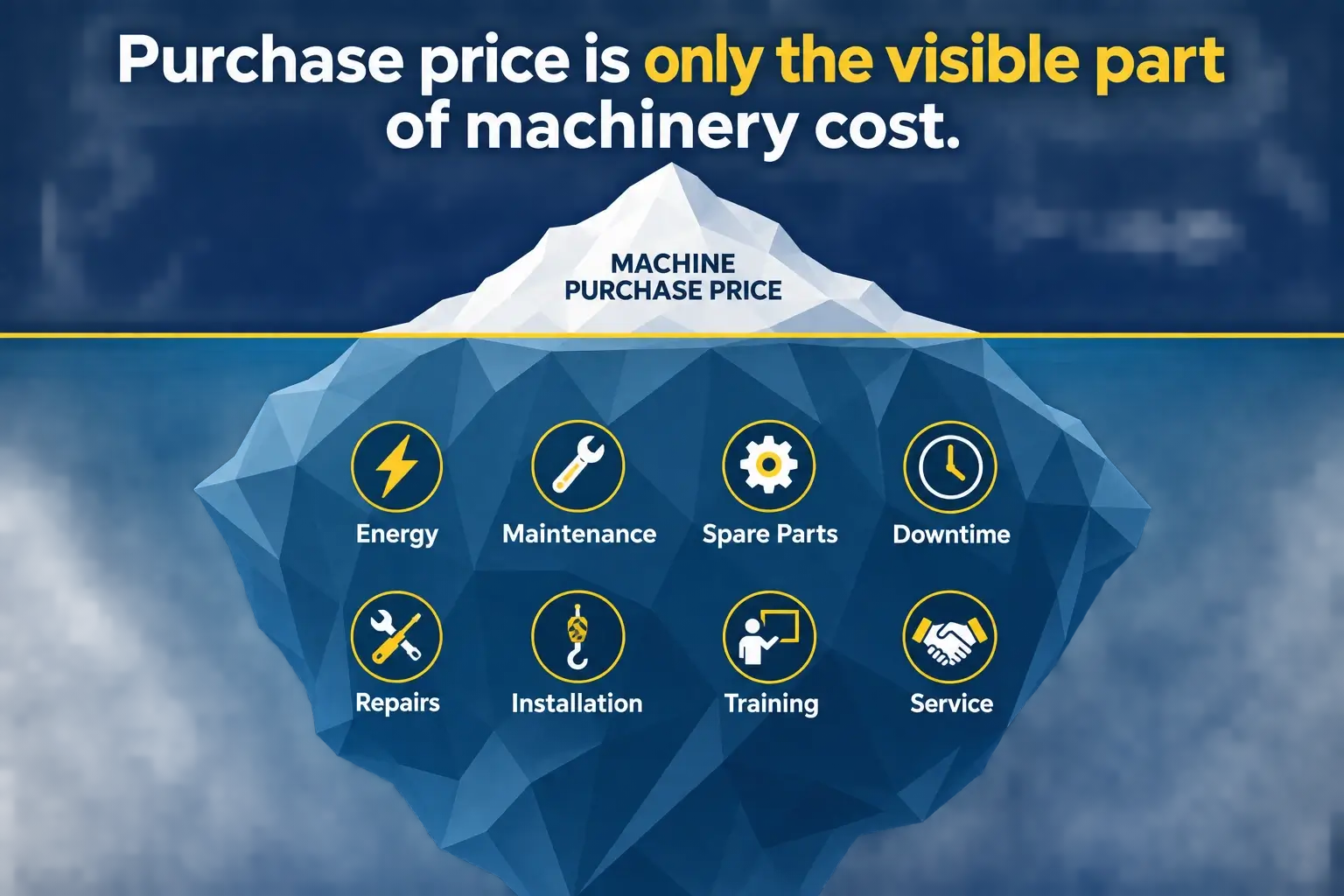
Consider:
- Purchase price after scope normalization
- Freight, duties, insurance and destination handling
- Installation, commissioning and training
- Energy and utility consumption at expected load
- Consumables and preventive maintenance
- Critical spare-parts inventory
- Expected repair and service costs
- Production loss and downtime exposure
- Expected service life and residual value where meaningful
Use transparent assumptions. A precise-looking cost model built on unsupported energy or maintenance data is not reliable.
Step 9: Score risk and support
After-sales support should be evaluated before the order, when commercial leverage is strongest.
- Who receives and owns a service case?
- What remote response time is promised?
- Which parts are stocked and where?
- Can local technicians or partners support the machine?
- Who pays for parts, labor and travel during warranty?
- Are PLC, HMI and parameter backups available?
- How are obsolete components and long-term parts handled?
- What evidence exists from comparable installed machines?
How should a weighted supplier scorecard be designed?
Set weights before final commercial negotiation to reduce bias. A typical structure may include technical compliance, supplier capability, quality and testing, delivery, support, commercial risk and total cost. The exact weighting must reflect the project.
For a production-critical customized line, technical compliance and acceptance evidence should dominate. For proven standard equipment with equivalent configurations, price and delivery may reasonably receive more weight.
Record the scoring rule, evidence and reviewer comment. Avoid unexplained numbers that create an illusion of objectivity.
Common supplier-comparison mistakes
- Comparing supplier model names instead of RFQ compliance
- Scoring before closing missing information and deviations
- Allowing a low price to offset a mandatory technical failure
- Ignoring excluded accessories, installation or documentation
- Accepting unapproved component substitutions as equivalent
- Comparing different Incoterms or currencies without adjustment
- Using unsupported life-cycle assumptions
- Treating factory size, certificates or customer logos as complete proof
- Failing to document why the selected supplier won
Final supplier selection decision
Prepare a short decision record showing compliant candidates, unresolved risks, normalized cost, weighted results and conditions that must be included in the technical agreement. Obtain final written confirmation of configuration, deviations, scope and acceptance obligations before issuing the purchase order or deposit.
The objective is not to find a perfect supplier. It is to select the supplier whose verified capability, proposed machine, controls and commercial accountability provide the strongest fit for the project.
Frequently asked questions
- How should I compare industrial machinery suppliers?
- Compare suppliers against the same RFQ using technical compliance, factory and engineering capability, component quality, scope, testing, delivery, commercial terms, life-cycle cost and after-sales support. Resolve deviations before comparing final evaluated cost.
- Should I choose the lowest machinery quotation?
- Not automatically. The lowest quoted price may exclude equipment, testing, documentation, installation or stronger components and may create higher energy, maintenance or downtime costs. Compare compliant scope and evaluated total cost.
- How many machinery suppliers should I shortlist?
- There is no universal number, but a focused shortlist of technically relevant suppliers is easier to evaluate than many weak candidates. Keep enough alternatives to benchmark the market while allowing a detailed review of each offer.
- What is a bid comparison matrix?
- A bid comparison matrix places every supplier's response against the same requirements and marks compliance, deviation, missing information, evaluated cost and evidence. It prevents attractive quotation layouts from hiding material differences.
- How should supplier evaluation criteria be weighted?
- Weight criteria according to project risk. Production-critical or customized machinery normally gives more weight to technical compliance, testing, reliability and support than to initial price alone.
- When are machinery quotations truly comparable?
- They are comparable after suppliers respond to the same controlled RFQ, deviations and exclusions are clarified, scope is normalized, commercial bases are aligned and the remaining offers meet mandatory requirements.
Request a machinery supplier comparison
Flux Equipment Pro can help normalize Chinese machinery quotations, review technical deviations, compare components and identify the commercial and operational differences that matter.
Compare industrial machinery suppliers
Share your RFQ and shortlisted quotations for a structured technical and commercial comparison.
Continuer la lecture
 Visites d’usines et salons professionnelsPlanifiez efficacement les visites d’usines de machines et les rendez-vous sur salons en Chine grâce à la préqualification des fournisseurs, aux programmes techniques, aux listes de contrôle d’usine et au suivi structuré.Lire: Visites d’usines et salons professionnels
 Inspection avant expédition des machines industriellesGuide pratique pour inspecter les machines industrielles avant expédition, notamment l’identité de la machine, la fabrication, les composants, les fonctions, les documents, les non-conformités et l’emballage export.Lire: Inspection avant expédition des machines industrielles
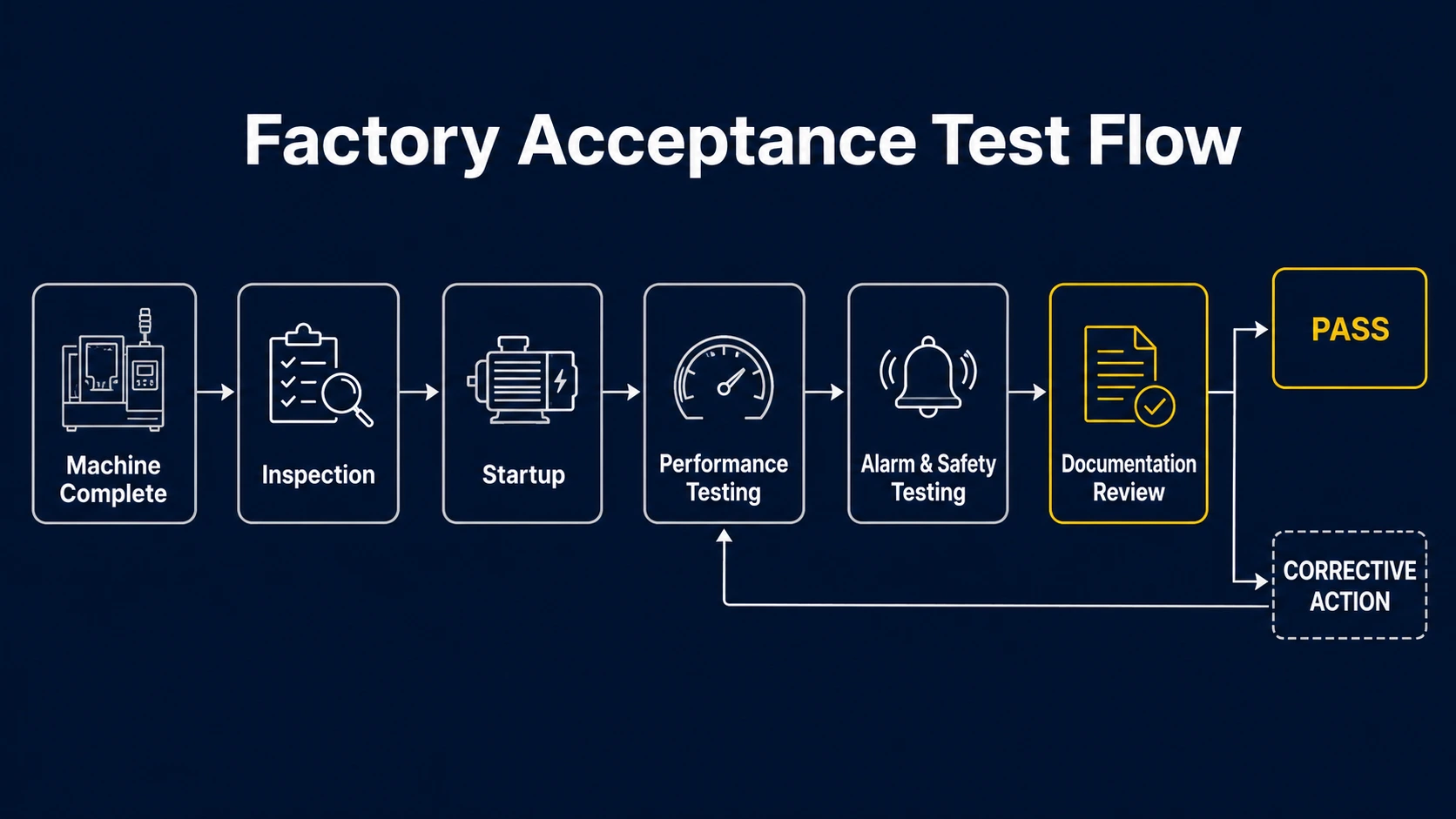 Essais de réception en usine des machines industriellesDécouvrez comment planifier et réaliser un Factory Acceptance Test pour des machines industrielles, avec protocoles, instruments, essais fonctionnels, essais de performance, écarts et autorisation d’expédition.Lire: Essais de réception en usine des machines industrielles