
المصنع مقابل المجمّع مقابل الشركة التجارية في الصين
قارن بين مصنعي المعدات في الصين، والمجمّعين، والشركات التجارية، بما في ذلك القدرات، والمخاطر، والمزايا، والأدلة التي يجب على المشترين التحقق منها.
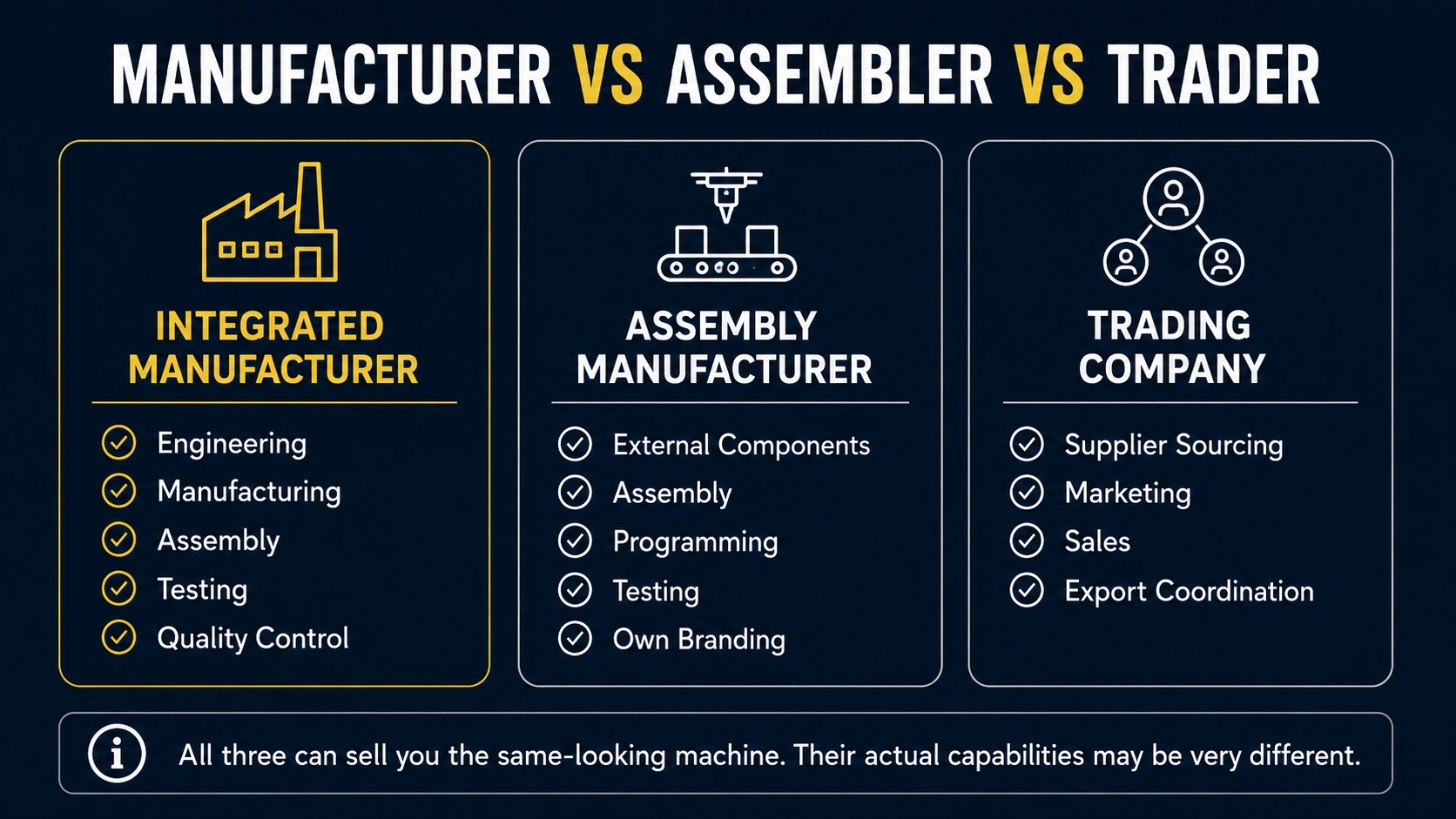

Chinese machinery suppliers frequently describe themselves as manufacturers, but the term can cover very different operating models. One company may machine critical parts, fabricate structures, assemble the system and test it internally. Another may purchase nearly every major component but perform competent engineering, integration and testing. A third may coordinate the order while an unrelated factory builds the equipment.
The objective is not to eliminate assemblers or traders automatically. It is to understand the supply chain before comparing quotations, signing the contract or paying a deposit.
For the complete sourcing process, see How to Source Industrial Machinery from China. To investigate a shortlisted supplier in detail, use the Chinese machinery manufacturer verification guide.
What is an integrated machinery manufacturer?
An integrated manufacturer performs several important value-creating processes within its own organization. Depending on the machinery category, these may include product engineering, machining, sheet-metal fabrication, welding, component manufacturing, system assembly, electrical integration, programming, quality control and performance testing.
Integration does not mean that every part is manufactured internally. Even highly capable machinery manufacturers normally purchase specialist motors, bearings, drives, PLCs, sensors, valves and other components. What distinguishes an integrated manufacturer is meaningful control over the machine's design, production and validation.
Potential advantages
- Direct access to product engineers and production management
- Better control over internally performed processes
- Faster investigation of technical deviations
- Greater ability to customize core machine architecture
- Clearer accountability when design and production belong to one entity
Questions to examine
Integration can also be overstated. A large facility does not prove that the relevant machine is designed or produced there. Confirm which processes apply to the exact product being quoted and whether the factory has current experience with comparable configurations.
What is a machinery assembler or OEM?
An assembler creates a finished machine by integrating purchased and outsourced components. Its internal contribution may include application engineering, component selection, mechanical and electrical assembly, PLC or HMI programming, system configuration, quality control and final testing.
For many machinery categories, assembly and system integration are the core manufacturing activities. A compressor packager may buy the air end, motor, drive and controller but still determine whether those components work together safely and efficiently. A packaging-line integrator may purchase conveyors, sensors and drives while creating the layout, control logic and operating sequence.
The key question is whether the assembler adds controlled engineering and validation. A transparent specialist integrator can be a better supplier than a vertically integrated factory with weak application knowledge or inconsistent quality control.
What a capable assembler should control
- Application review and configuration approval
- Critical component selection and compatibility
- Approved suppliers and substitution control
- Mechanical and electrical assembly standards
- PLC, HMI and communication configuration
- Incoming and in-process quality checks
- Functional and measured performance testing
- Drawings, manuals, backups and component records
- Warranty coordination and replacement-parts support
An assembler becomes risky when it lacks the engineering competence to evaluate the combined system, changes components without approval or performs only a basic startup instead of a meaningful performance test.
What is a Chinese trading company?
A trading company primarily connects the buyer with products manufactured by other companies. It may manage supplier discovery, quotation, export documentation, consolidation, logistics, communication and commercial coordination.
Trading companies range from simple intermediaries to technically capable sourcing organizations. Some specialize in one machinery category and know the supplier market deeply. Others list many unrelated products and depend almost entirely on factory responses.
When can a trader add value?
A trader may be useful when it provides:
- Access to factories that have limited international sales capability
- Strong multilingual communication and response management
- Consolidation of several machines or accessories
- Export licensing, documentation and logistics support
- Local project coordination across multiple suppliers
- Commercial leverage built through repeat factory business
- Clear responsibility for inspection, warranty or corrective action
The value should be observable. Forwarding messages and adding a margin without technical review, supplier control or accountability is not enough for a critical machinery order.
Can a company have more than one role?
Yes. Hybrid structures are common.
A manufacturer may produce its main machines but trade accessories from partner factories. A factory may use a related export company to sign international contracts and receive foreign-currency payments. A system integrator may assemble the line while outsourcing fabrication and specialist modules. A trading company may hold an investment or long-term exclusive relationship with a factory.
This is why the buyer should classify the supplier for the specific offered machine, not the company in general.
- 1Map the entities
Identify the salesperson's company, contracting entity, payment beneficiary and physical factory.
- 2Map the work
List who engineers, fabricates, procures, assembles, programs, tests and packs the machine.
- 3Map responsibility
State which entity is accountable for conformity, delivery, warranty and after-sales support.
How do the three supplier types compare?
| Factor | Integrated manufacturer | Assembler or OEM | Trading company |
|---|---|---|---|
| Primary contribution | Engineering and multiple internal production processes | System integration, assembly, programming and testing | Supplier access and commercial or export coordination |
| Customization | Often strongest for core product architecture | Often strong for configuration and integrated systems | Depends on access to and influence over the factory |
| Technical access | Usually direct, if the right engineers participate | Direct to integration engineers but sometimes indirect to component makers | May be indirect unless the trader has technical staff |
| Process control | Higher for internal operations | Depends on procurement, assembly and test discipline | Depends on how actively the trader controls the chosen factory |
| Product range | Usually concentrated around core categories | May cover related configurations and systems | Can be broad across factories and categories |
| Export support | Varies by factory experience | Varies by organization | Often a core capability |
| Main risk | Assuming factory size proves application capability | Weak compatibility engineering or undocumented substitutions | Hidden factory, limited technical control or unclear accountability |
Is buying directly from a factory always cheaper?
Not necessarily. A direct factory quotation may remove an intermediary margin, but price depends on many other factors:
- Order quantity and the supplier's minimum commercial threshold
- Configuration and included scope
- The factory's export and payment structure
- Sales commissions or distributor arrangements
- Testing, documentation, packaging and warranty coverage
- The cost of communication and project coordination
A trader's offer may be higher because it includes a margin, or it may be commercially competitive because of purchasing volume and established factory terms. The correct comparison is total value and risk under the same technical scope,not the apparent number of intermediaries.
A website, email domain or sales representative may appear to belong to a factory even when another legal entity contracts or receives payment. Map the entities and their relationships before assuming the transaction is direct.
Which supplier type is best for customized machinery?
Customized machinery requires technical ownership. The preferred supplier is the organization that can understand the application, control the affected engineering decisions, coordinate every outsourced element, validate the finished configuration and support it after installation.
An integrated manufacturer may be strongest when customization changes the core mechanical design. An assembler or system integrator may be strongest when the project combines established modules into a new process line. A technically competent trading or sourcing company may be valuable when several specialist factories must be coordinated.
Ask who will approve drawings, calculations, components, software logic and deviations. Those responsibilities should not remain hidden behind the salesperson.
How can buyers identify the supplier's real role?
Start with direct, process-specific questions and then verify the answers.
- Which Chinese legal entity owns or operates the factory?
- Which entity will sign the contract and receive payment?
- Which parts and processes are completed internally?
- Which components and operations are outsourced, and to whom?
- Who employs the engineers, assemblers and quality personnel?
- Who owns the production and testing equipment?
- Where will this exact machine be assembled and tested?
- Can the buyer speak directly with the responsible engineer?
- Who approves substitutions and corrective actions?
- Which entity provides the warranty, spare parts and technical support?
Then compare the answers with the Chinese business license, factory address, live or on-site observations, employee introductions, production records, quotations, contracts and bank details. The detailed procedure is covered in How to Verify a Chinese Machinery Manufacturer.
What warning signs suggest the supplier is hiding its role?
The following patterns deserve further investigation:
- The supplier refuses to provide its registered Chinese name
- Company names differ without a documented explanation
- The factory address changes or cannot be confirmed
- The salesperson avoids live video or factory access
- Photographs show inconsistent branding or unrelated facilities
- Technical questions must always be forwarded, with no access to engineers
- The supplier cannot explain which processes are internal
- Certificates and customer cases belong to other entities
- The bank beneficiary has no clear relationship to the contract
- Warranty responsibility moves between the seller and factory
A trader may openly state that it is a trader and still be reliable. Concealment is more concerning than the business model itself.
How should the final supplier decision be made?
Score each candidate against the same requirement rather than selecting by label.
| Decision criterion | Evidence to request |
|---|---|
| Technical fit | Written compliance review, deviations and responsible engineer's explanation |
| Control of execution | Process map showing internal and outsourced work |
| Component control | Approved component schedule and substitution procedure |
| Testing capability | Test method, instruments, facilities and comparable reports |
| Commercial clarity | Consistent entities, scope, price, terms and payment beneficiary |
| Accountability | Named responsibility for defects, correction, warranty and support |
| Relevant experience | Comparable machines under similar operating conditions |
The best supplier is the one whose capabilities, controls and responsibilities match the project,and whose claims can be verified before payment.
Frequently asked questions
- What is the difference between a manufacturer and a trading company in China?
- A manufacturer performs defined production, assembly or engineering activities, while a trading company mainly sources products and coordinates the transaction with one or more factories. Some suppliers combine both roles, so buyers should verify the actual work performed for the offered machine.
- Is an assembler considered a manufacturer?
- An assembler may legitimately be a machinery manufacturer when it engineers the system, selects and integrates components, controls assembly, programs the controls and validates finished performance. The important issue is capability and accountability, not the label alone.
- Is buying machinery from a trading company always risky?
- No. A competent trading company can add value through supplier access, export coordination, communication and project management. Risk increases when it hides the factory, lacks technical competence or cannot accept responsibility for quality and warranty obligations.
- How can I tell whether a Chinese supplier owns a factory?
- Check the Chinese legal entity and factory relationship, review the site and current production, identify who owns the equipment and employs the workers, and ask which processes are completed internally. A structured factory verification is stronger than relying on website claims or photographs.
- Should I always buy directly from the factory?
- Not always. Direct purchasing can improve transparency and technical access, but the best choice depends on order size, customization, export capability, communication, after-sales support and the intermediary's measurable value.
- Can one Chinese company be both a manufacturer and trader?
- Yes. A company may manufacture its core products while trading complementary equipment or using a related export entity. Buyers should identify the role the company plays for the specific machine being purchased.
Get help identifying the right Chinese machinery supplier
If you are comparing manufacturers, assemblers or trading companies for an industrial machinery project, Flux Equipment Pro can help map the supplier structure, verify the factory, review technical responsibilities and compare candidates using consistent evidence.
Compare Chinese machinery suppliers
Share the machine, shortlisted suppliers, technical requirements and destination market.
تابع القراءة
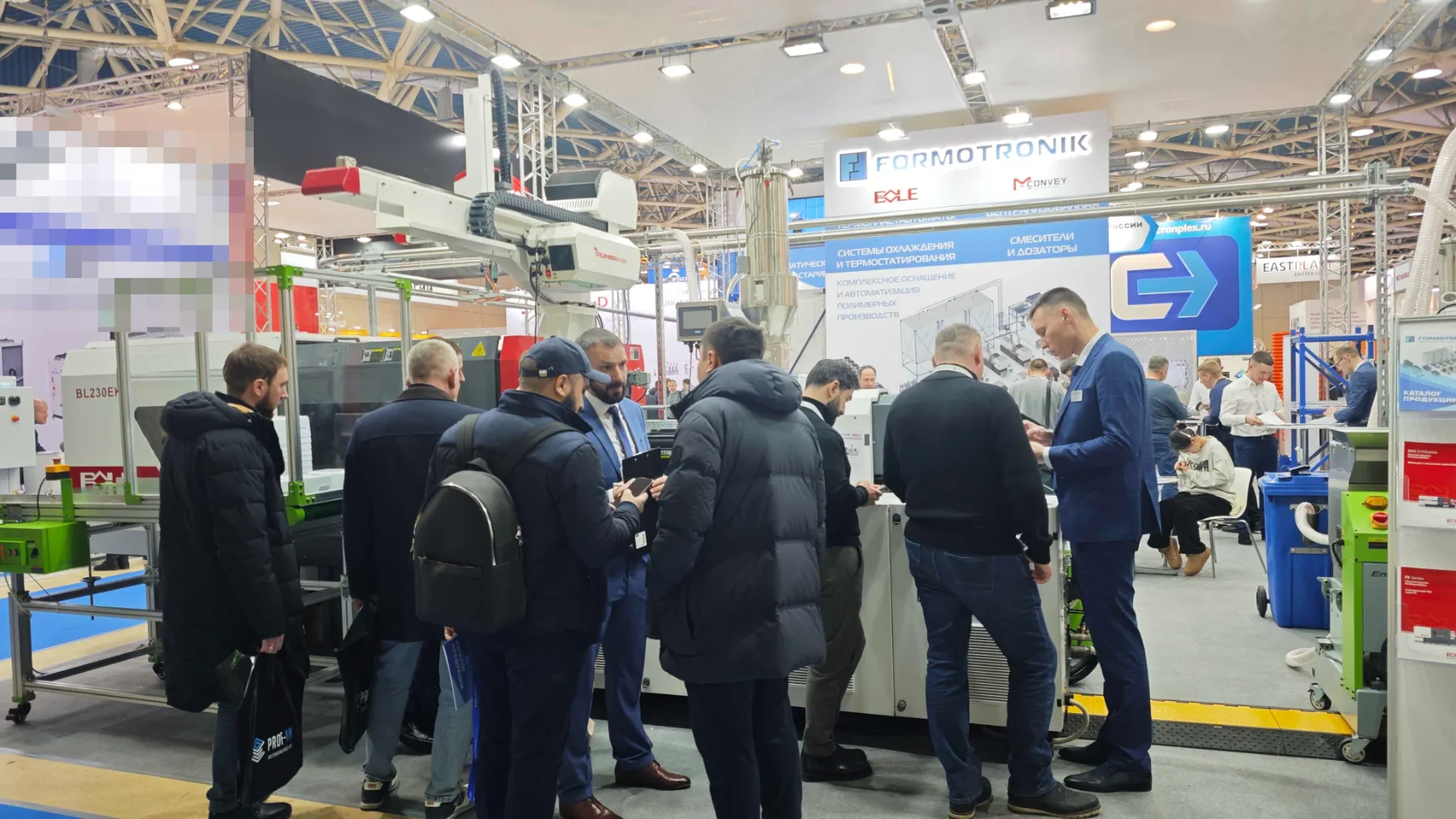 زيارات المصانع والمعارض التجاريةخطط بفعالية لزيارات مصانع المعدات والاجتماعات في المعارض داخل الصين باستخدام التأهيل المسبق للموردين، والجداول الفنية، وقوائم التحقق من المصنع، والمتابعة المنظمة.اقرأ: زيارات المصانع والمعارض التجارية
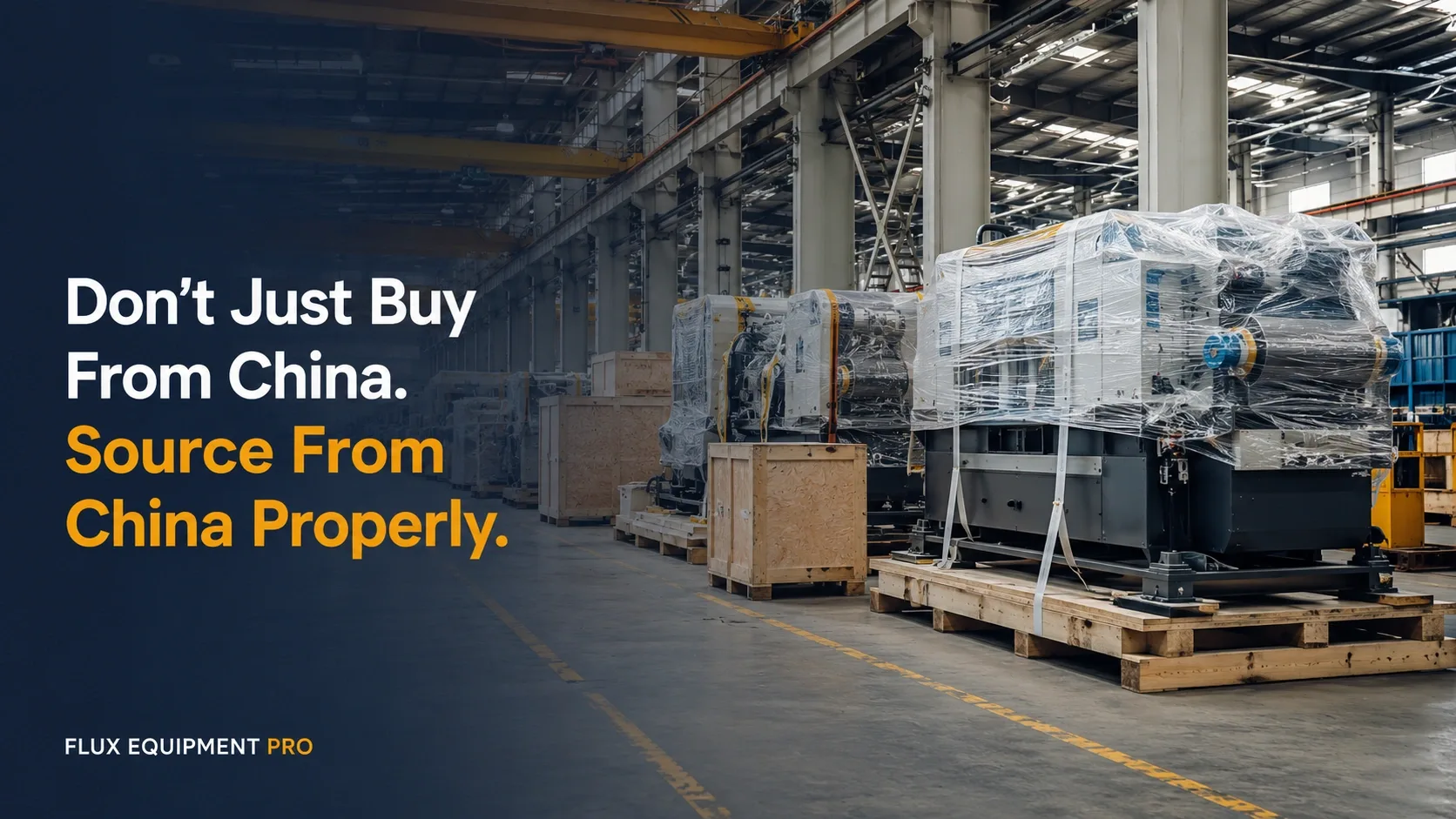 فحص المعدات الصناعية قبل الشحندليل عملي لفحص المعدات الصناعية قبل الشحن، بما يشمل هوية الآلة، وجودة التصنيع، والمكونات، والوظائف، والمستندات، وحالات عدم المطابقة، وتغليف التصدير.اقرأ: فحص المعدات الصناعية قبل الشحن
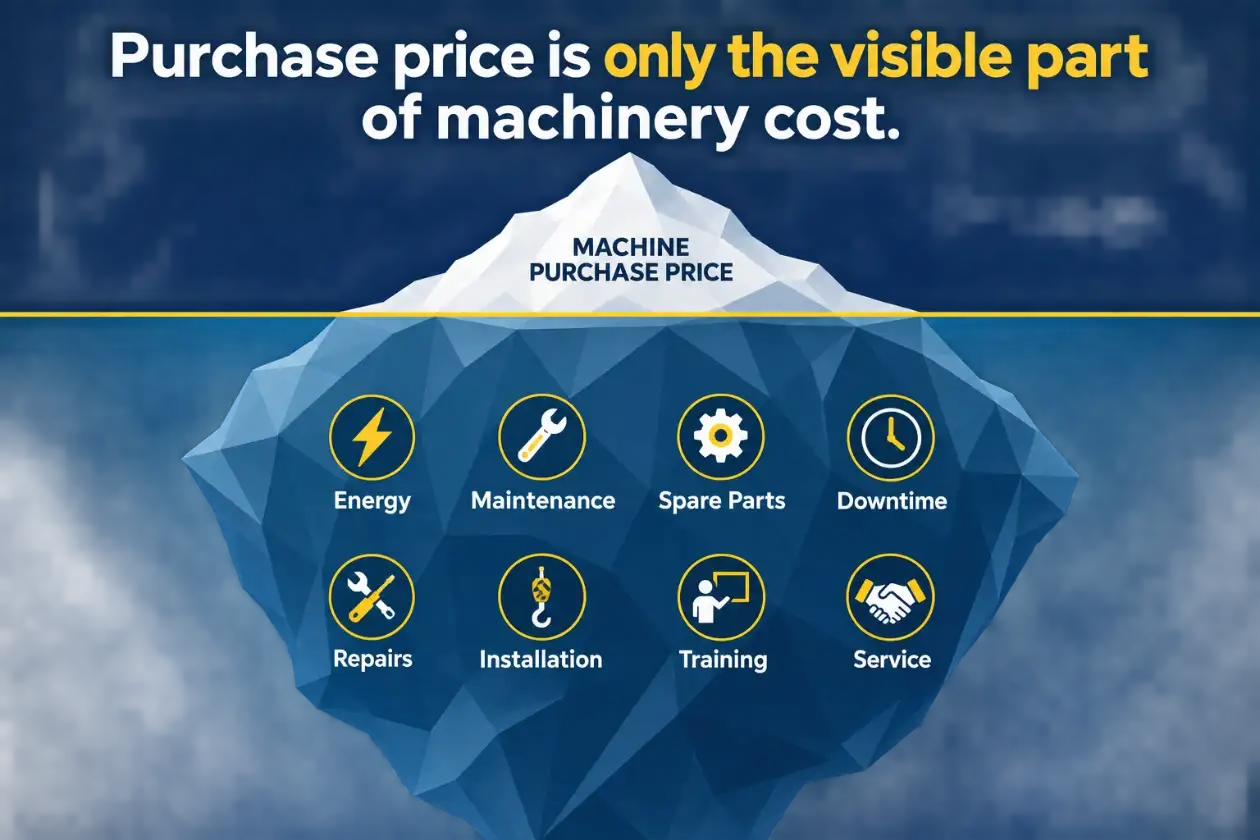 كيفية مقارنة موردي المعدات الصناعيةقارن موردي المعدات الصناعية بناءً على المطابقة الفنية، والمكونات، ونطاق التوريد، والاختبارات، والشروط التجارية، وتكلفة دورة الحياة، وخدمة ما بعد البيع، وليس السعر فقط.اقرأ: كيفية مقارنة موردي المعدات الصناعية