
Como verificar um fabricante chinês de máquinas
Aprenda a verificar a identidade jurídica, operações da fábrica, capacidade técnica, certificados, controles de qualidade e dados de pagamento de um fabricante chinês antes de fazer um pedido.
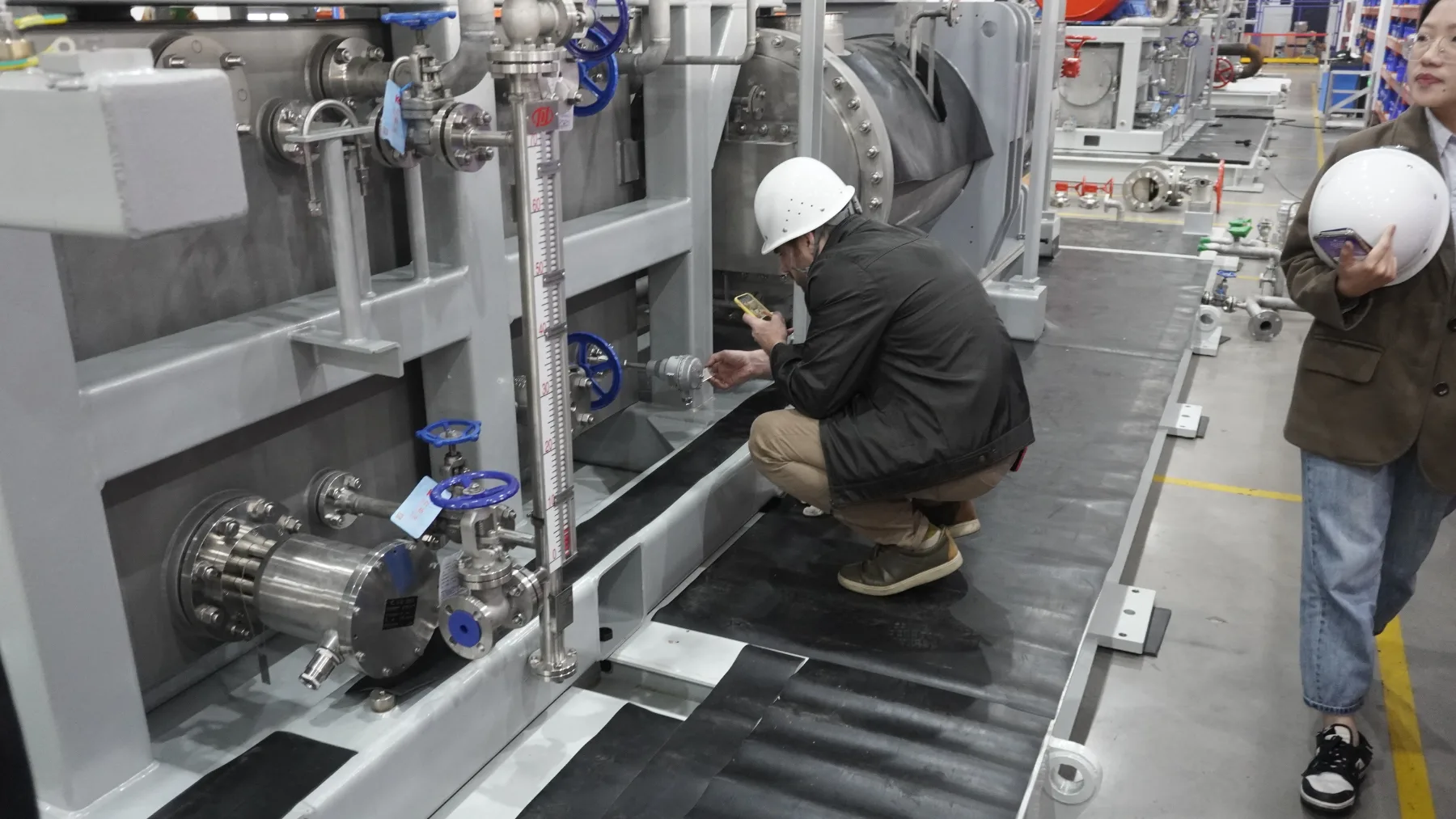

Verifying a Chinese machinery manufacturer is not the same as confirming that a company exists. A supplier can have a valid business license, a polished website and professional sales staff while still lacking the engineering depth, production control or testing capability required for a particular machine.
The purpose of verification is to answer three separate questions:
- Who is legally responsible for the order and receiving the payment?
- What does the supplier genuinely manufacture, assemble, program, test or outsource?
- Can its organization deliver the required machine under the buyer's operating conditions?
This guide focuses specifically on supplier verification. For the complete purchasing process, including RFQs, quotation comparison, inspection and FAT, see How to Source Industrial Machinery from China: Complete Guide.
What does machinery supplier verification include?
Machinery supplier verification is a structured review of a company's legal identity, factory role, technical capability, quality controls, commercial consistency and relevant delivery experience. It combines documents, direct questions, physical evidence and independent checks.
| Verification layer | What it should establish | What it cannot prove alone |
|---|---|---|
| Legal | The registered entity, status, address, business scope and responsible parties | Factory ownership or technical capability |
| Commercial | Consistency among quotation, contract, invoice, payment account and warranty obligations | That the offered machine will meet performance requirements |
| Physical | The factory location, people, equipment, production activity and testing resources | Consistent quality across every future order |
| Technical | Whether the team understands the application, configuration, components and acceptance criteria | Financial stability or legal ownership |
| Operational | How production, quality control, traceability, deviations and after-sales support are managed | Compliance unless certificates and product scope are validated |
Supplier verification reduces identity and capability risk. The finished machine must still be inspected and tested against the agreed specification before shipment.
Step 1: How do you verify the Chinese legal entity?
Start with the supplier's official name in Chinese. English trading names are useful for communication but may not identify the registered entity accurately.
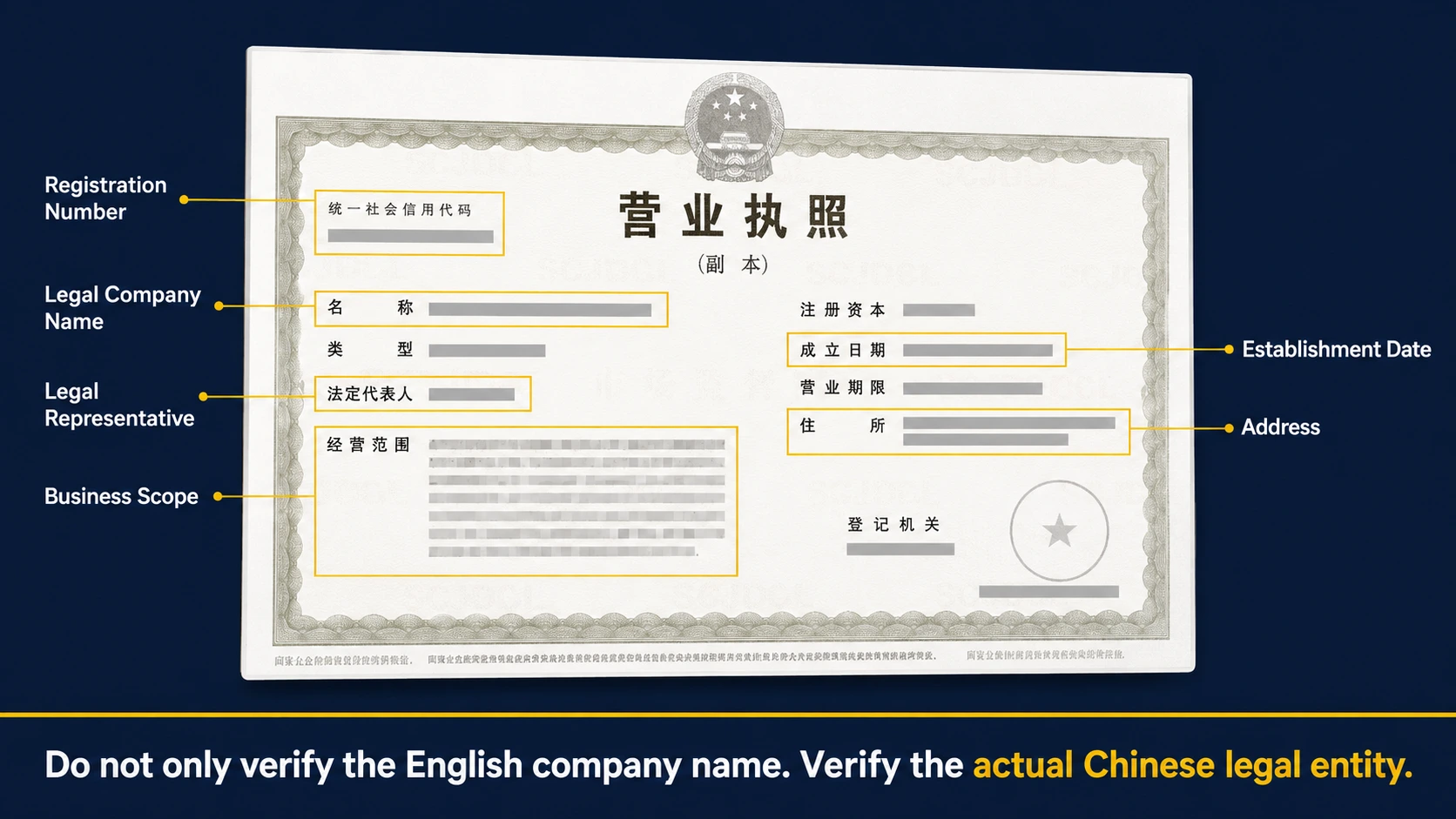
Request a clear copy of the Chinese business license and record:
- Official Chinese company name
- Unified Social Credit Code
- Registered address
- Legal representative
- Registration and establishment dates
- Registered capital, where relevant to the check
- Business scope
- Company status and registration authority
The business scope can provide context, but it should not be treated as definitive proof of present manufacturing activity. Broad scopes are common, and legal wording does not show which processes happen inside a factory today.
Match the same entity across the transaction
Compare the business-license entity with the names shown on the quotation, sales contract, pro forma invoice, bank beneficiary details, certificates and export documents.
- The supplier has provided its full registered Chinese company name
- The Unified Social Credit Code and registered address have been recorded
- The contracting entity is identified clearly
- The beneficiary bank account belongs to the contracting company or an explained related entity
- Any manufacturer-export company relationship is documented
- Certificate ownership is consistent with the offered product and responsible entity
- Changes to payment instructions require independent reconfirmation through a known contact
Some manufacturers legitimately use a related trading or export company to contract with overseas customers. That structure is not automatically a problem. The buyer should understand the relationship, know which entity receives payment, and state who carries responsibility for conformity, delivery and warranty.
Step 2: Is the supplier a manufacturer, assembler or trader?
Supplier labels are less important than the real division of work. Machinery businesses frequently combine internal engineering and assembly with externally sourced motors, drives, bearings, sensors, controllers, castings or fabricated parts.
Ask the supplier to map the offered machine process by process:
- 1Engineering
Who selects and approves the configuration, calculations, drawings and control logic?
- 2Fabrication
Which frames, vessels, housings or mechanical parts are made internally or outsourced?
- 3Procurement
Who supplies the critical components, and how are approved models controlled?
- 4Assembly
Where is the machine assembled, wired and programmed, and by whose employees?
- 5Testing
Which functional and performance tests are performed, using what instruments and facilities?
- 6Support
Which entity provides documentation, spare parts, troubleshooting and warranty service?
An assembler may be the right supplier if it has competent system engineering, controlled component selection, repeatable assembly, proper testing and clear accountability. A trading company may add value through communication, export coordination or access to specialist factories. Problems arise when the supplier hides its role, cannot identify the factory or cannot control technical decisions.
For a deeper comparison of these business models, see Manufacturer vs Assembler vs Trading Company in China.
Step 3: How do you verify the real factory?
A useful factory check should confirm both the site and its current operations. Pre-recorded videos, selected photographs and showroom tours can support a review, but they are easy to curate and may omit the areas that matter.
Remote factory verification
When an immediate visit is not practical, request a live video call with a continuous walkthrough. Ask the supplier to move from the entrance and company signage through production, assembly, component storage, quality control, testing and finished-goods areas. During the call, request spontaneous views of machine nameplates, current work orders or equipment relevant to the offered category.
Remote checks are useful for early screening. They do not fully replace a structured on-site visit for high-value, customized or production-critical equipment.
On-site factory verification
During a visit, compare what you see with what the supplier claimed before the meeting. The dedicated China machinery factory-visit and trade-fair guide covers trip planning, agendas and post-visit comparison.
- Company signage and address match the entity or documented manufacturing relationship
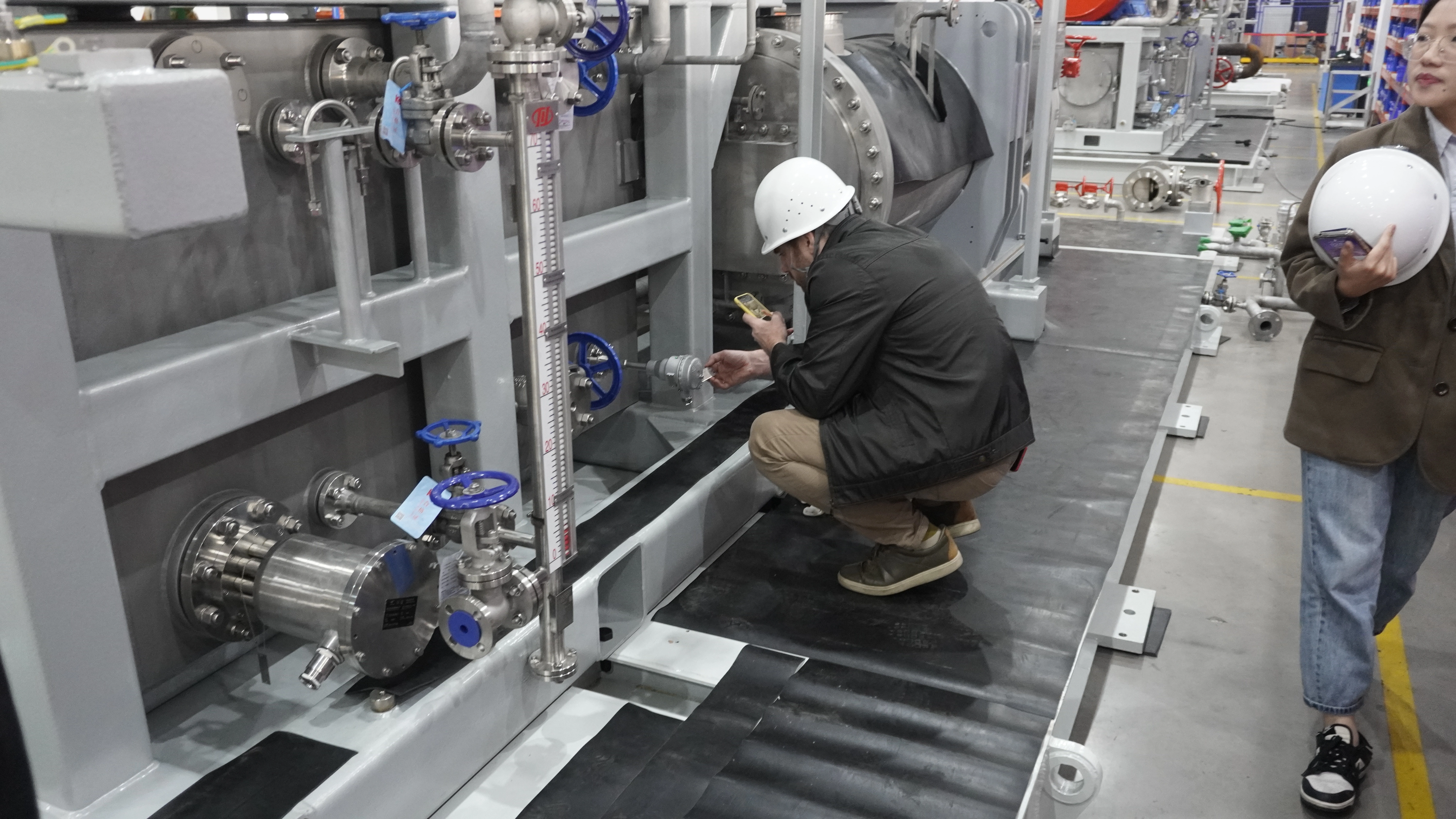
- Relevant machines are currently in production, assembly or testing
- Production equipment supports the processes claimed as internal
- Engineers and quality personnel can discuss the offered configuration directly
- Components are identified, stored and traceable to approved suppliers or specifications
- Inspection and test instruments are suitable, identified and maintained
- Quality records show incoming, in-process and final controls
- Non-conforming work is identified and managed rather than hidden
- Completed comparable equipment can be matched to records or customer projects
- Packaging and finished-goods areas support the proposed export method
Step 4: Can the supplier's engineers validate the application?
Machinery capability is application-specific. A factory may manufacture reliable standard equipment but lack experience with the required pressure, material, capacity, automation level, environment or destination-market standard.
Ask technical questions that require reasoning rather than yes-or-no promises:
- Which operating condition has the greatest effect on the proposed performance?
- Which components were selected specifically for this application, and why?
- What capacity margin or derating has been applied?
- Which requirement cannot be met without changing the configuration?
- How will performance be measured during acceptance testing?
- What are the allowable tolerances and test conditions?
- Which drawings, calculations, manuals and software backups will be supplied?
- What failures have occurred on comparable machines, and what was changed afterward?
Strong suppliers may challenge an unrealistic requirement, disclose limitations or propose a more suitable configuration. Automatic agreement with every request is not proof of flexibility; it may indicate that the technical review has not happened.
Standardized questions make differences in competence, transparency and response quality easier to see. Preserve the answers and approved deviations in the final technical agreement.
Step 5: How should certificates be verified?
A certificate PDF is evidence to examine, not a conclusion. Confirm:
- The certificate owner and manufacturing entity
- The issuing or certification body
- The applicable standard or regulation
- The exact product family and models covered
- Issue date, expiry date and present validity
- Whether the certificate is authentic at the issuing source
- Whether the document is relevant to the destination country and intended use
A certificate issued to another company, covering another model or based on an irrelevant standard should not be presented as proof of compliance for the offered machine.
Technical compliance can also depend on the final configuration. A change in motor, electrical cabinet, safety device or control system may affect whether earlier documentation remains applicable. Where compliance is commercially or legally critical, obtain qualified destination-market advice.
Step 6: Are customer cases and references credible?
The most useful reference is not simply a famous logo or a photograph of a shipment. Look for similarity to the proposed project:
- Same machinery category and operating principle
- Similar output, capacity, pressure, material or process
- Similar duty cycle and environmental conditions
- Similar customization and automation complexity
- Same or comparable destination-market requirements
- Sufficient operating history to discuss reliability and support
Ask for the machine model, shipment period, configuration and evidence that the supplier delivered it. Customer confidentiality may limit direct contact or document sharing, but the supplier should still be able to explain technically comparable work.
Step 7: How do you assess quality control and testing capability?
Quality claims should connect to specific control points. Ask how incoming components are checked, how work-in-progress is inspected, how measuring instruments are managed, how non-conformities are recorded and how final release is approved.
| Evidence | Stronger indication | Weak indication |
|---|---|---|
| Incoming control | Defined checks tied to component identity and specification | Visual inspection only or no retrievable records |
| Traceability | Critical parts linked to model, supplier, batch or serial information | Unlabeled parts and undocumented substitutions |
| In-process control | Recorded checkpoints with responsible personnel and acceptance limits | Quality checked only after completion |
| Test capability | Relevant load, functional or performance testing with suitable instruments | Startup demonstration without measured acceptance data |
| Non-conformance | Documented segregation, correction, root cause and retest | Problems corrected informally without records |
| Final release | Approved checklist, test report, documentation and machine identity | Shipment based only on schedule or payment |
Verification should establish whether the factory can run the required test,not whether it merely owns test equipment. The purchase agreement should later define the actual inspection and Factory Acceptance Test applicable to the buyer's machine.
Step 8: What should be verified before paying a deposit?
Before payment, convert the investigation into a documented approval decision and review the machinery supplier payment red flags.
- The legal entity, contracting party and payment beneficiary are confirmed
- The actual factory and the supplier's manufacturing, assembly or trading role are understood
- The factory has relevant engineering, production, quality-control and testing capability
- Comparable machinery experience is credible and relevant to the application
- Certificates have been checked for owner, product scope, validity and destination relevance
- The supplier has reviewed the technical RFQ and disclosed deviations
- Critical components, outsourced processes and substitution controls are documented
- Inspection rights, acceptance testing and corrective-action responsibilities are agreed
- Warranty, spare-parts and after-sales responsibilities belong to an identified entity
- Unresolved inconsistencies and warning signs have been closed in writing
Use risk-based depth. A repeat order for a simple standard accessory does not require the same investigation as a customized production line. Verification should become more rigorous as order value, customization, safety impact, technical complexity and downtime exposure increase.
What warning signs should stop the verification process?
Pause before payment when the supplier refuses reasonable evidence or when important facts remain inconsistent.
Common warning signs include:
- Refusal to provide the Chinese legal name or business license
- Unexplained differences among company, contract and bank-account names
- A factory address or ownership story that changes during the discussion
- Refusal of a live walkthrough, factory visit or independent verification
- Generic technical answers that do not address the application
- Certificates belonging to another entity or product family
- Customer cases that cannot be connected to comparable equipment
- Pressure to pay before specifications and responsibilities are agreed
- Claims that every requirement is possible without engineering review
- Refusal to permit inspection or measured testing before shipment
One inconsistency may have a reasonable explanation. Several unresolved inconsistencies indicate that the buyer does not yet have enough evidence to proceed.
What comes after manufacturer verification?
Verification qualifies the supplier; it does not complete the sourcing process. The next controls are a measurable RFQ, comparable quotations, a detailed contract, production follow-up, pre-shipment inspection and Factory Acceptance Testing where appropriate.
Use the full industrial machinery sourcing roadmap to connect supplier verification with the remaining purchasing stages.
Frequently asked questions
- How do I verify a Chinese machinery manufacturer?
- Verify the supplier's Chinese legal entity, match its company and bank details, confirm its real factory role, inspect current production and testing capability, validate certificates at the issuing source, review comparable machinery cases, and document the findings before paying a deposit.
- How can I check a Chinese company's business license?
- Request the original Chinese business license and check the company name, Unified Social Credit Code, registered address, legal representative, establishment date, business scope and current status. Match the legal entity against the quotation, contract, invoice, beneficiary bank account and certificates.
- Does a Chinese business license prove that a supplier is a manufacturer?
- No. A valid business license confirms a registered legal entity, but it does not prove that the company owns a factory, performs the claimed production processes or can manufacture the required machine. Factory and technical capability must be verified separately.
- Can a trading company be a reliable machinery supplier?
- Yes, if it is transparent about the factory, adds useful technical or commercial coordination, and accepts clear accountability. The buyer should still identify the actual factory, verify its capability and document which entity is responsible for quality, warranty and payment.
- What should I check during a machinery factory visit in China?
- Check active production, engineering resources, production and assembly equipment, component traceability, quality-control records, testing facilities, comparable machines, warehouse activity and the people responsible for the offered configuration.
- When should supplier verification happen?
- Complete the main legal, factory, technical and commercial checks before paying a deposit. Continue verification during production and confirm the finished machine through inspection and testing before final payment or shipment release.
Request manufacturer verification in China
If you have shortlisted a Chinese machinery supplier, share its company details, the offered machine and your project requirements. Flux Equipment Pro can support legal-entity checks, factory verification, technical coordination and evidence collection before you commit to the order.
Verify a Chinese machinery manufacturer
Share the supplier, machine, technical requirement and current purchasing stage.
Continue lendo
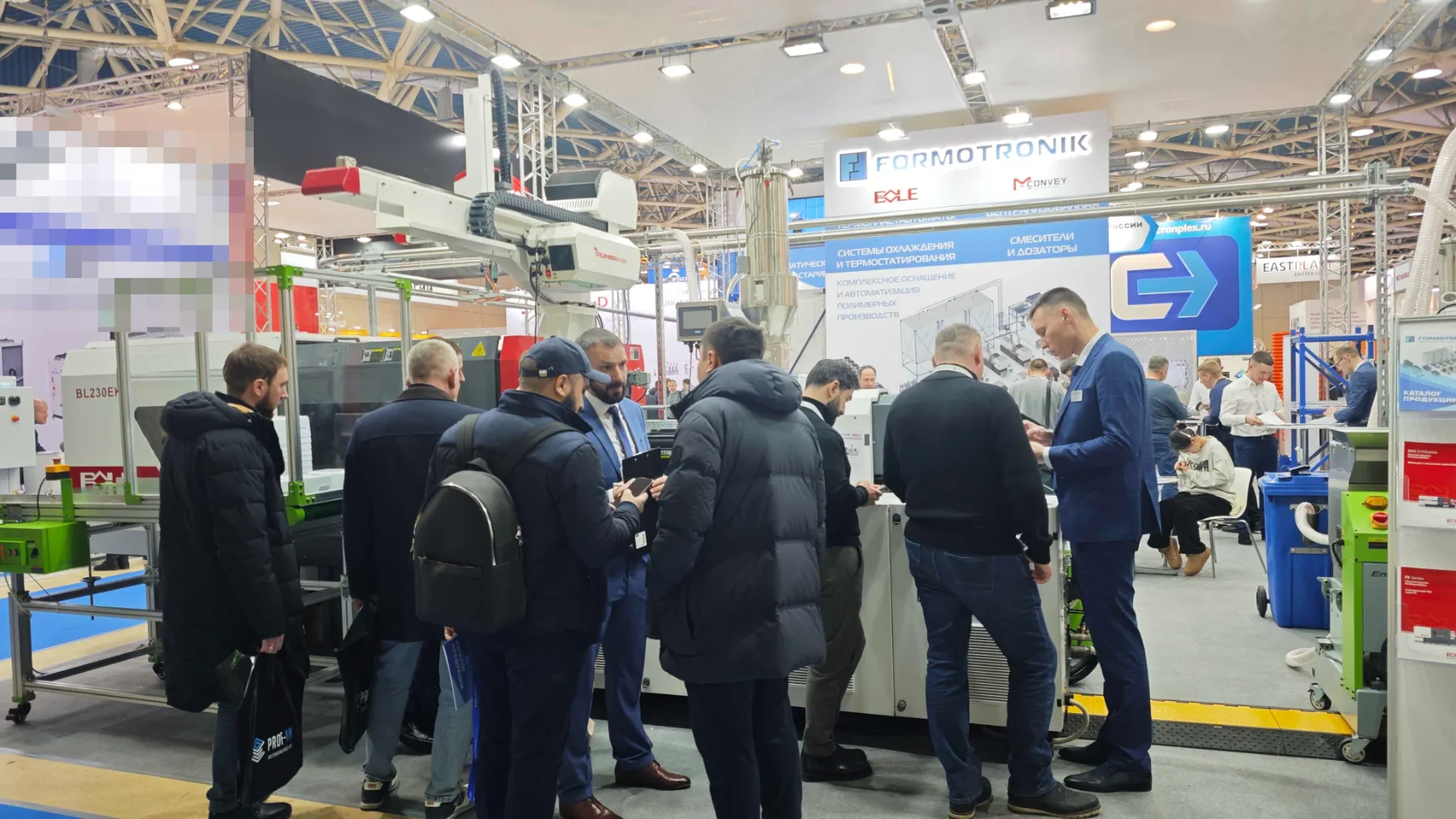 Visitas a fábricas e feiras comerciaisPlaneje visitas eficazes a fábricas de máquinas e reuniões em feiras na China usando pré-qualificação de fornecedores, agendas técnicas, checklists de fábrica e acompanhamento estruturado.Ler: Visitas a fábricas e feiras comerciais
 Inspeção pré-embarque de máquinas industriaisGuia prático para inspecionar máquinas industriais antes do embarque, incluindo identidade da máquina, acabamento, componentes, funções, documentos, não conformidades e embalagem de exportação.Ler: Inspeção pré-embarque de máquinas industriais
 Como comparar fornecedores de máquinas industriaisCompare fornecedores de máquinas industriais com base em conformidade técnica, componentes, escopo, testes, condições comerciais, custo do ciclo de vida e suporte pós-venda, não apenas pelo preço.Ler: Como comparar fornecedores de máquinas industriais